MIAS and INbreast are mammographic datasets for the detection and diagnosis of breast cancer. With the dawn of digital mammograms, one important preprocessing step for the tasks of detection and diagnosis is the removal of the pectoral muscle and background area from the images, therefore this task has been tackled by the literature over the last decades. The suplementary material below is a complement to the contents in the paper Deep Semantic Segmentation of Mammographic Images, awaiting acceptance in the 21st International Conference on Medical Image Computing & Computer Assisted Intervention (MICCAI) 2018. This page contains:
[su_list icon=”icon: circle”]
- the pretrained Deep Neural Networks (DNNs) used in the paper;
- the predictions made by the DNNs over the datasets;
- python source codes with the modified versions of the networks used in the paper;
- the complete spreadsheets with all the results from the paper; and
- a python source code for forwarding mammograms through the pretrained models.
[/su_list]
[su_accordion]
[su_spoiler title=”Pretrained models”]
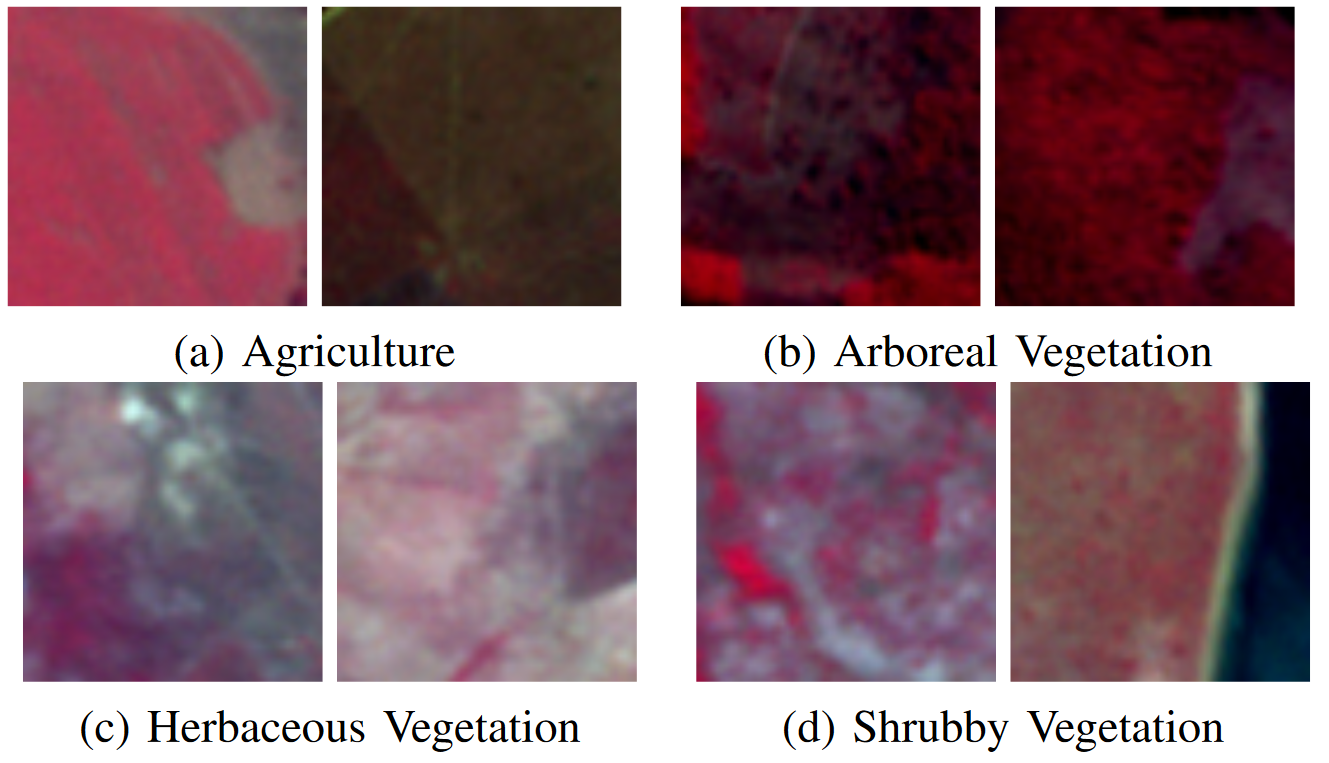
The 1,311 scenes, which have <strong>of 64 x 64 pixels</strong>, are partitioned into 4 classes: Agriculture, Arboreal, Herbaceous and Shrubby Vegetation. The identification of each vegetation (i.e. ground-truth annotation) was perfoategories: rmed manually by biologists and specialists. The dataset has:
| Type |
Instances |
| Agriculture |
47 |
| Arboreal Vegetation |
962 |
| Herbaceous Vegetation |
191 |
| Shrubby Vegetation |
111 |
Download
[/su_spoiler]
[/su_accordion]
[su_accordion]
[su_spoiler title=”Segmentation predictions”]
The 1,311 scenes, which have <strong>of 64 x 64 pixels</strong>, are partitioned into 4 classes: Agriculture, Arboreal, Herbaceous and Shrubby Vegetation. The identification of each vegetation (i.e. ground-truth annotation) was performed manually by biologists and specialists. The dataset has:
| Type |
Instances |
| Agriculture |
47 |
| Arboreal Vegetation |
962 |
| Herbaceous Vegetation |
191 |
| Shrubby Vegetation |
111 |
Download
[/su_spoiler]
[/su_accordion]
[su_accordion]
[su_spoiler title=”Python code for the modified DNN models”]
The 1,311 scenes, which have <strong>of 64 x 64 pixels</strong>, are partitioned into 4 classes: Agriculture, Arboreal, Herbaceous and Shrubby Vegetation. The identification of each vegetation (i.e. ground-truth annotation) was performed manually by biologists and specialists. The dataset has:
| Type |
Instances |
| Agriculture |
47 |
| Arboreal Vegetation |
962 |
| Herbaceous Vegetation |
191 |
| Shrubby Vegetation |
111 |
Download
[/su_spoiler]
[/su_accordion]
[su_accordion]
[su_spoiler title=”Complete set of results”]
The 1,311 scenes, which have <strong>of 64 x 64 pixels</strong>, are partitioned into 4 classes: Agriculture, Arboreal, Herbaceous and Shrubby Vegetation. The identification of each vegetation (i.e. ground-truth annotation) was performed manually by biologists and specialists. The dataset has:
| Type |
Instances |
| Agriculture |
47 |
| Arboreal Vegetation |
962 |
| Herbaceous Vegetation |
191 |
| Shrubby Vegetation |
111 |
Download
[/su_spoiler]
[/su_accordion]
[su_accordion]
[su_spoiler title=”Python code for testing in your own datasets”]
The 1,311 scenes, which have <strong>of 64 x 64 pixels</strong>, are partitioned into 4 classes: Agriculture, Arboreal, Herbaceous and Shrubby Vegetation. The identification of each vegetation (i.e. ground-truth annotation) was performed manually by biologists and specialists. The dataset has:
| Type |
Instances |
| Agriculture |
47 |
| Arboreal Vegetation |
962 |
| Herbaceous Vegetation |
191 |
| Shrubby Vegetation |
111 |
Download
[/su_spoiler]
[/su_accordion]