Category: Research Topics

  • Computer vision

    Computer vision

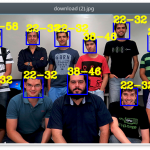
    Our team is involved in the research collaborations that involve many classical Computer Vision applications. Our actuation mainly concern image and video processing for surveillance, digital forensics and biometrics with focus on detection, classification, and spatio-temporal feature encoding.

    Some relevant work in this topic are:

    [su_spacer]

    A. Ferreira, L. Bondi, L. Baroffio, P. Bestagni, J. Huang, J. A. dos Santos, S. Tubaro and A. Rocha . Data-Driven Feature Characterization Techniques for Laser Printer Attribution. IEEE Transactions on Information Forensics and Security (TIFS). Volume 12, number 8. Pages 1860-1873, 2017.
    C; Caetano, J. A. dos Santos, W. R. Schwartz. Optical Flow Co-occurrence Matrices: A novel spatiotemporal feature descriptor. In: 23rd International Conference on Pattern Recognition (ICPR), 2016. p. 1947.
    A. Ferreira, S. Felipussi, C. Alfaro, P. Fonseca, J. E. Vargas-Munoz, J. A. dos Santos and A. Rocha. Behavior Knowledge Space-Based Fusion for Copy-Move Forgery Detection. IEEE Transactions on Image Processing (TIP). Volume 25, number 10. Pages 4729-4742. 2016.
    [siteorigin_widget class=”Recent_Posts_Widget_With_Thumbnails”][/siteorigin_widget]
  • Medical Imaging

    Medical Imaging

    Medical Imaging has been widely used for the diagnosis and detection of several illnesses for decades, as it can capture potentially important characteristics of the body in a non-invasive manner. The advent of Digital Image Processing techniques and afterwards of Machine Learning methods in the area was another important milestone for the analysis of medical images, as many parts of the physician’s procedure for detection of abnormalities could be aided or improved by computers, strengthening the reliability of such processes. The PATREO research group works on the whole pipeline of detection and classification of mammograms, including several aspects of pre and postprocessing of these exams. Our main research area in Medical Images is focused on the automatic detection of abnormalities on mammographic images using Deep Learning, providing physicians with an automated second opinion.
  • Machine Learning

    Machine Learning

    Our Laboratory is interested in the study and development of machine learning techniques mainly for classification, feature learning, active learning, temporal series analysis, feature selection, and clustering purposes. Thus, our research very often includes development and adaptation of supervised and unsupervised learning approaches, typically based on Neural Networks, Evolutionary Algorithms, and Support Vector Machines. We also work on strategies to improve the effectiveness of classification systems by more effective ensemble of classifiers according to applications needs. Finally, we are very interested on the development of new active learning strategies aiming at the inclusion of the user in the training process.

    Some relevant work in this topic are:

    [su_spacer]

    K. Nogueira, O. A. B. Penatti, J. A. dos Santos. Towards better exploiting convolutional neural networks for remote sensing scene classification. Pattern Recognition, 61, 539-556, 2017.
    O. A.. Penatti, K. Nogueira, J. A. dos Santos, Do deep features generalize from everyday objects to remote sensing and aerial scenes domains?. In Proceedings of the IEEE Conference on Computer Vision and Pattern Recognition Workshops (pp. 44-51), 2015.
    F. A. Faria, J. A. dos Santos, A. R. Rocha, R. da S. Torres. A Framework for Selection and Fusion of Pattern Classifiers in Multimedia Recognition. Pattern Recognition Letters, v. 39, p. 52-64, 2014.
    [siteorigin_widget class=”Recent_Posts_Widget_With_Thumbnails”][/siteorigin_widget]
  • Content Based Retrieval

    Content Based Retrieval

    Several applications, such as digital libraries, medicine, biodiversity information systems, deal with large image collections.
    Thus, it is essential to provide efficient and effective means to retrieve images. This is the objective of the so-called content-based image retrieval (CBIR) systems. In these systems, the searching process consists in, for a given image, computing the most similar images stored in the database. The searching process relies on the use of image descriptors. A descriptor is composed by two functions: feature vector extraction and similarity computation. The feature vectors encode image properties, like color, texture, and shape. Therefore, the similarity between two images is computed as a function of their feature vectors distance.
    PATREO group is interested in the development of new image feature descriptors, ranking aggregation techniques and indexing structures for large-scale image retrieval/classification.

    Some relevant work in this topic are:

    [su_spacer]

    F. A. Faria, D. C. G. Pedronette, J. A. dos Santos, A. R. Rocha, and R. da S. Torres. Rank Aggregation for Pattern Classifier Selection in Remote Sensing Images. IEEE Journal of Selected Topics on Earth Observations and Remote Sensing, v. 7, p. 1103-1115, 2014.
    A. T. da Silva, J. A. dos Santos, A. X. Falcão, R. da S. Torres, L. P. Magalhães. Incorporating multiple distance spaces in optimum-path forest classification to improve feedback-based learning. Computer Vision and Image Understanding (Print), v. 116, p. 510-523, 2012..
    C. D. Ferreira, J. A. dos Santos, R. da S. Torres, M. A. Gonçalvez, R. C. Rezende, W. Fan. Relevance Feedback based on Genetic Programming for Image Retrieval. Pattern Recognition Letters, v. 32, p. 27-37, 2011.
    [siteorigin_widget class=”Recent_Posts_Widget_With_Thumbnails”][/siteorigin_widget]
  • Remote sensing

    Remote sensing

    Geographic Information Systems (SIGs) are automated systems whose purpose is storing, analyze and manipulate geographic data. These systems help decision-making on various issues related to environmental and urban public monitoring policies. In addition, they are important in economic activities, such as agriculture and mineral extraction.

    In this context, Remote Sensing Images (RSIs) is one of the most important sources of data, especially with regard to the creation of maps. This process and overall model as a classification problem with respect to a learning system with the user-supplied interest pattern and assign a class to the rest of the regions of the image. Due to recent advances in sensor technology, new challenges and opportunities have emerged in pattern recognition for remote sensing imaging. The Increasing accessibility of images with good resolution and spectral, temporal and / or spatial data has made possible deeper and detailed analyzes in several applications.

    PATREO research focus in the development of pattern recognition strategies for remote sensing, which includes the following subtopics: spatial feature representation, spectral band selection/combination, time series analysis, segmentation, and multi-sensor data fusion.

    Some relevant work in this topic are:

    [su_spacer]

    K. Nogueira, O. A. B. Penatti and J. A. dos Santos. Towards better exploiting convolutional neural networks for remote sensing scene classification. Pattern Recognition, 61, 539-556, 2017.
    L. C. B. dos Santos, S. J. F. Guimarães, J. A. dos Santos. Efficient Unsupervised Band Selection Through Spectral Rhythms. IEEE Journal of Selected Topics in Signal Processing, vol.9, no.6, p.1016-1025, 2015.
    J. A. dos Santos, P-H. Gosselin, S. Phillip-Foliguet, R. da S. Torres, A. X. Falcão. Multiscale Classification of Remote Sensing Images. IEEE Transactions on Geoscience and Remote Sensing, v. 50, p. 3764-3775, 2012
    [siteorigin_widget class=”Recent_Posts_Widget_With_Thumbnails”][/siteorigin_widget]